Trolls, the villains of Scandinavian folklore
Published August 15, 2026
How old is the word “troll”, where do the tusser fit in, and why do the fairy tales pit righteousness, wit and courage against the mountain folk?
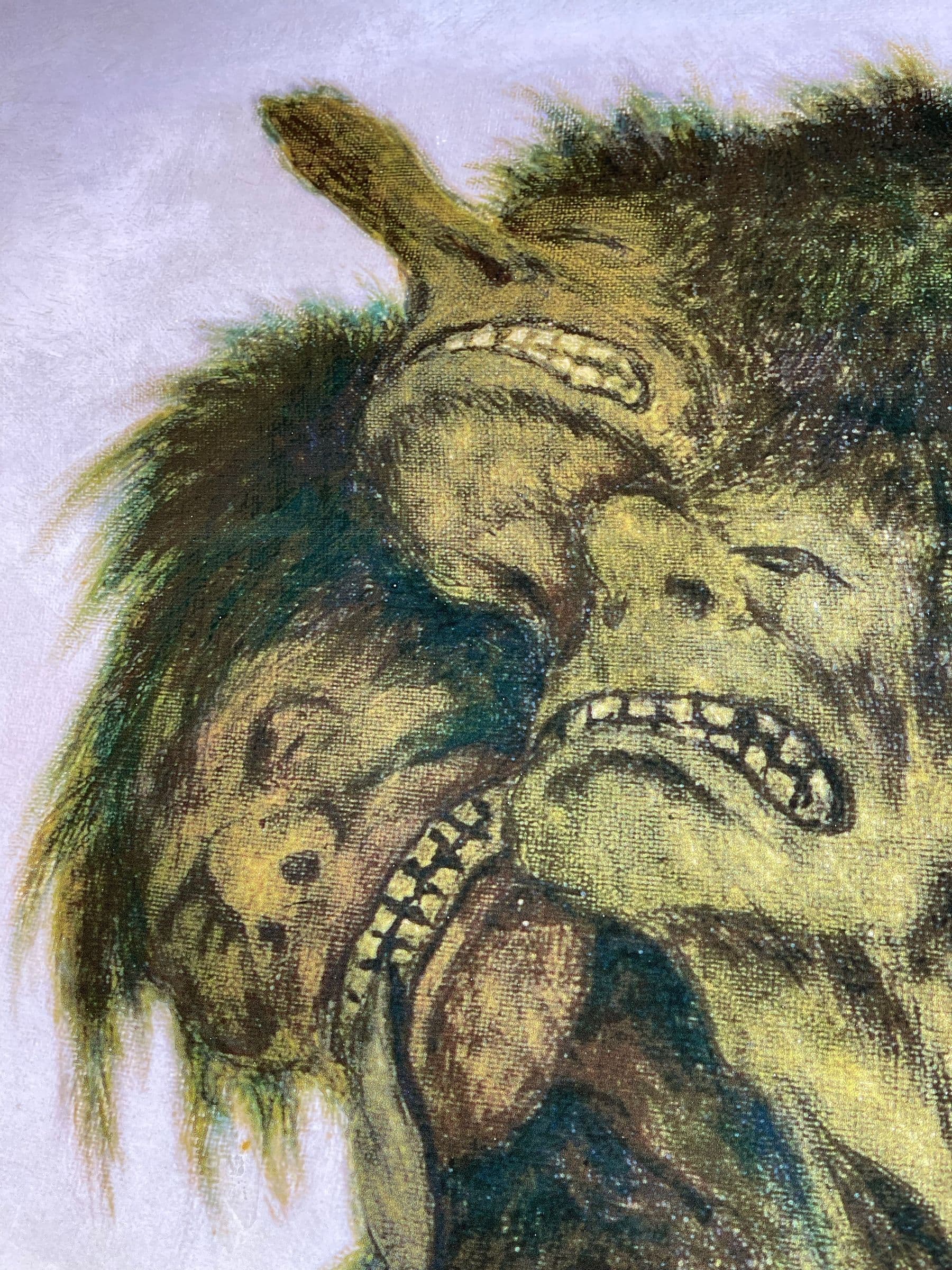
“With three-headed trolls, you will always have trouble (…)”: from the Norse poem Skirnesmál, Elder Edda, Iceland, 13th century
It is difficult to date exactly how old the word “troll” is. The Norse poem Skirnesmál, from the Elder Edda, is the first written source using “troll” for supernatural creatures. Most likely, the word “troll” comes from Old Norse “thurs”, a word later used to describe the smaller trolls living in the woods, the so-called tusser, creatures known from Swedish and Finnish folklore as well. The trolls and the tusser are thus closely related, but the trolls tend to be a lot bigger and more menacing, while the tusser usually are more mischievous (they are usually not dangerous unless they feel threatened).
Trolls sometimes live together in big family groups, and in some myths they have sheep, cattle, and goats. While male trolls tend to rely purely on brutal strength, thus not always being very bright, female trolls are more likely to use magic and witchcraft, and they can therefore often be more cunning and dangerous than their male counterparts.
In the Middle Ages, trolls were typically positioned against Christianity and aligned against the values of the state. They are often “the boogeyman” in Norwegian folk tales and beliefs and can be defeated through a combination of righteousness, intellect, and courage.